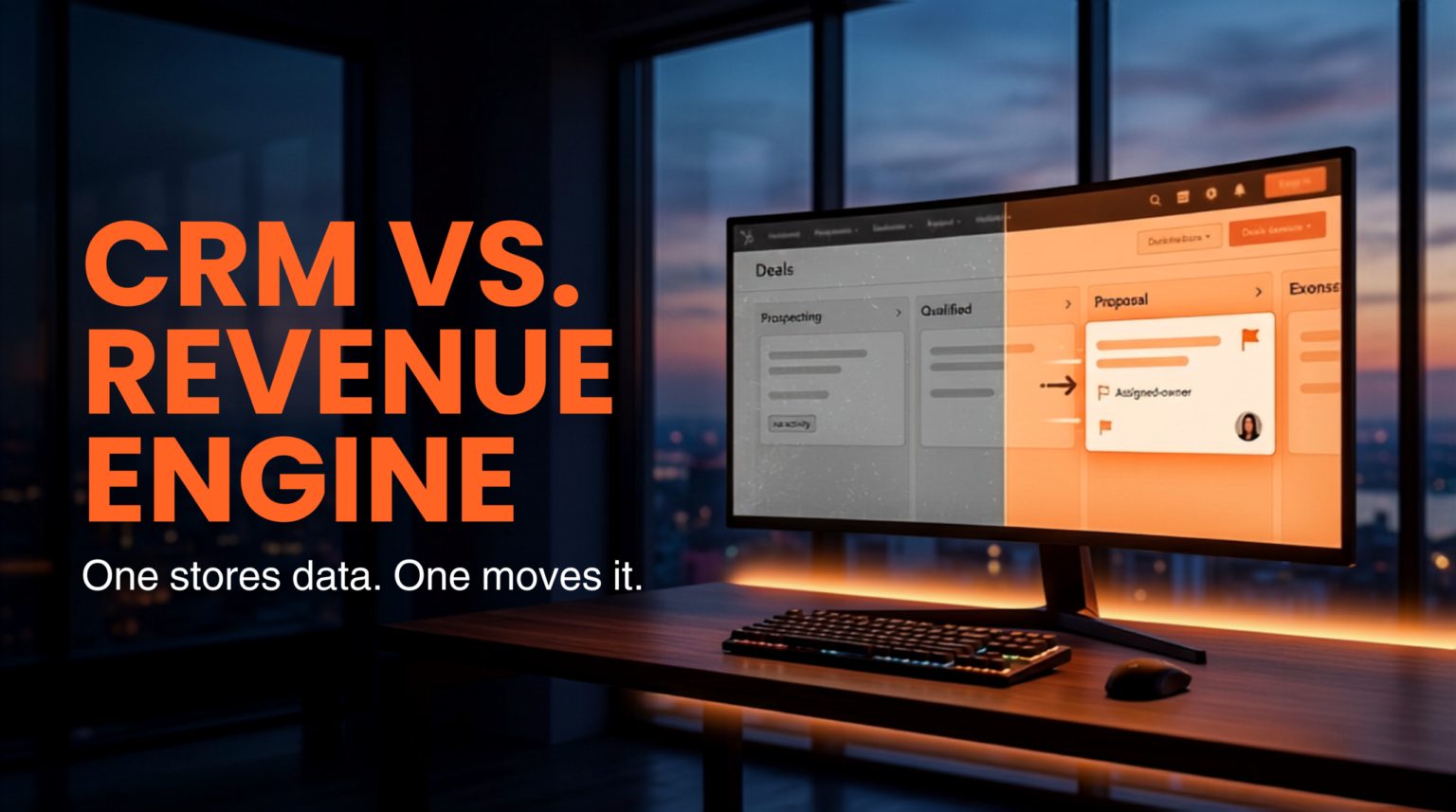
The Difference Between a CRM and a Revenue Engine
Your CRM knows a deal has been sitting...
September 17, 2026
A $132,000 deal sits in the late stage of your pipeline. The close date is today. Nobody has touched the record in three weeks.
The day comes and goes. Nothing happens. Nobody notices, because nothing forced anyone to look.
The CRM recorded the fact perfectly. It logged the exact date the contract went out. It tracked the days ticking by. But it did not act on that information. The CRM knows the deal is stalling. It just doesn’t do anything about it.
That gap between knowing a fact and doing something about it is an expensive mistake, and it’s one that shows up every single day in B2B sales. The software worked exactly as designed. The pipeline still leaked.
A CRM is built to store data. It keeps track of names, dates, and amounts. It tells you what happened in the past, and shows you the current state of a deal, if you take the time to look for it. It requires a person to create movement. Someone has to log in, filter the deals, check the dates, and decide what happens next.
A revenue engine is different. One stores data. One moves it.
A revenue engine decides what happens next the moment that data changes. It doesn’t wait for a sales rep to notice a stalled deal. It actively monitors the pipeline, identifies the bottleneck, and forces a response. Your team shouldn’t have to hunt for their next task. The system hands it to them.
Take that $132,000 deal from the top. A CRM alone just holds the fact that it’s stalled. It marks the close date in red and leaves the deal sitting in the exact same spot until someone manually drags it to closed lost. A revenue engine catches the same deal, flags it automatically, assigns an owner, and puts a next action on that person’s desk before the deal quietly dies. If the rep ignores it, the system escalates the warning to a manager.
The software underneath is identical. The difference is whether anything actually happens once the data changes. A lead fills out a form on your website. A CRM creates a contact record. A revenue engine routes that lead to the right territory owner and sends an alert in seconds.
Founders spend thousands of dollars a month on software, expecting it to run the sales process for them. What they get instead is an expensive digital filing cabinet. They assume the software alone is doing the job. It isn’t.
Data sitting still is not the same as data driving decisions. A clean dashboard might look great in a board meeting, but a dashboard doesn’t close deals. Execution closes deals. Reps are busy chasing new meetings and putting out fires. They don’t have time to scroll through list views hunting for quiet problems, so the loudest clients get the attention and the quiet deals age out and die before anyone notices. You don’t lose that revenue because the product is bad. You lose it because of the visibility gap sitting underneath it.
Bad data doesn’t just cost you the one deal, it costs you the forecast built on top of it. A CEO asks for a quarterly revenue projection. The sales leader exports a list from the CRM. Half the deals have close dates from last month. The other half have zero logged activity in weeks. The projection that comes out of that isn’t a forecast, it’s a guess wearing a spreadsheet.
A system of action prevents that guess from ever getting built. It forces data hygiene in real time. If a close date passes without an update, the system demands one before that deal is allowed to sit quietly for another week. A system of record reflects intent. A system of action enforces reality, which is the only version of the pipeline a real forecast can actually be built on.
Software alone does not create this difference. You can buy the best platform on the market, and if you treat it like a spreadsheet, it will act like a spreadsheet.
Building a system of action takes deliberate work. It requires setting rules, defining triggers, and mapping out the exact steps for every scenario a stalled deal might hit. That’s why a platform needs an Operator.
At trailBlazer6, we place trained, managed Operators inside your HubSpot portal to run your revenue operations day to day. This is an ongoing, staffed service, not a one-time dashboard build. Our Operators turn stored data into acted-on data. They build the workflows that flag stalled deals, set up the routing rules that get leads to the right rep instantly, and maintain the monitoring layer that catches broken processes before they cost you money.
A founder trying to build this on nights and weekends usually gives up the first time a workflow breaks. Sales teams should sell. Founders should run the business. An Operator’s only job is making sure your revenue engine runs, today, tomorrow, and every week after that. You get the execution, not just the software.
If your CRM is just sitting there, that isn’t a tooling problem. That’s an execution problem. The platform is capable of more, it just needs someone to drive it.
Book a meeting and we’ll show you what a revenue engine looks like, using your own data.
Your CRM knows a deal has been sitting...
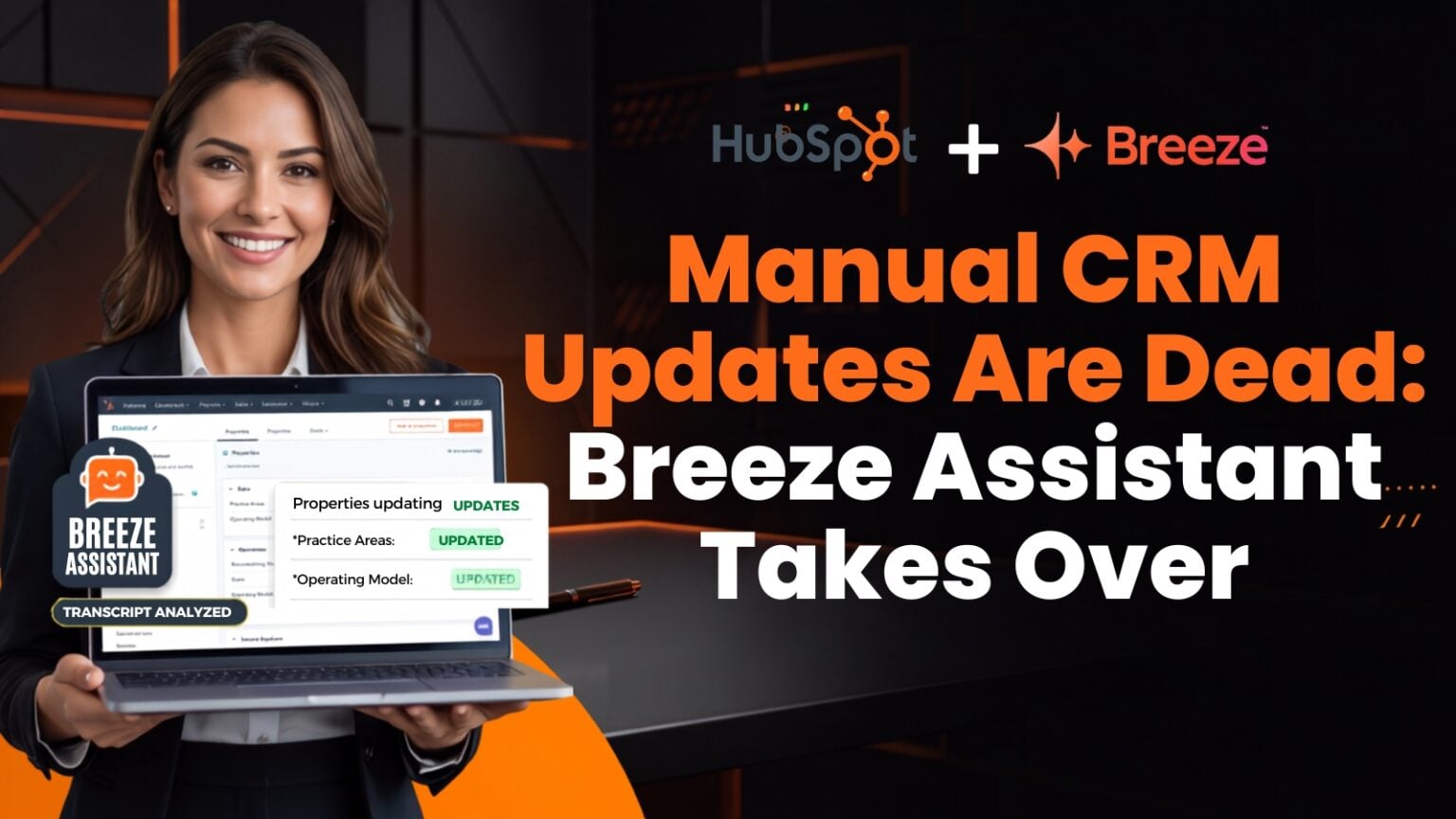
Your reps are still logging call data by...
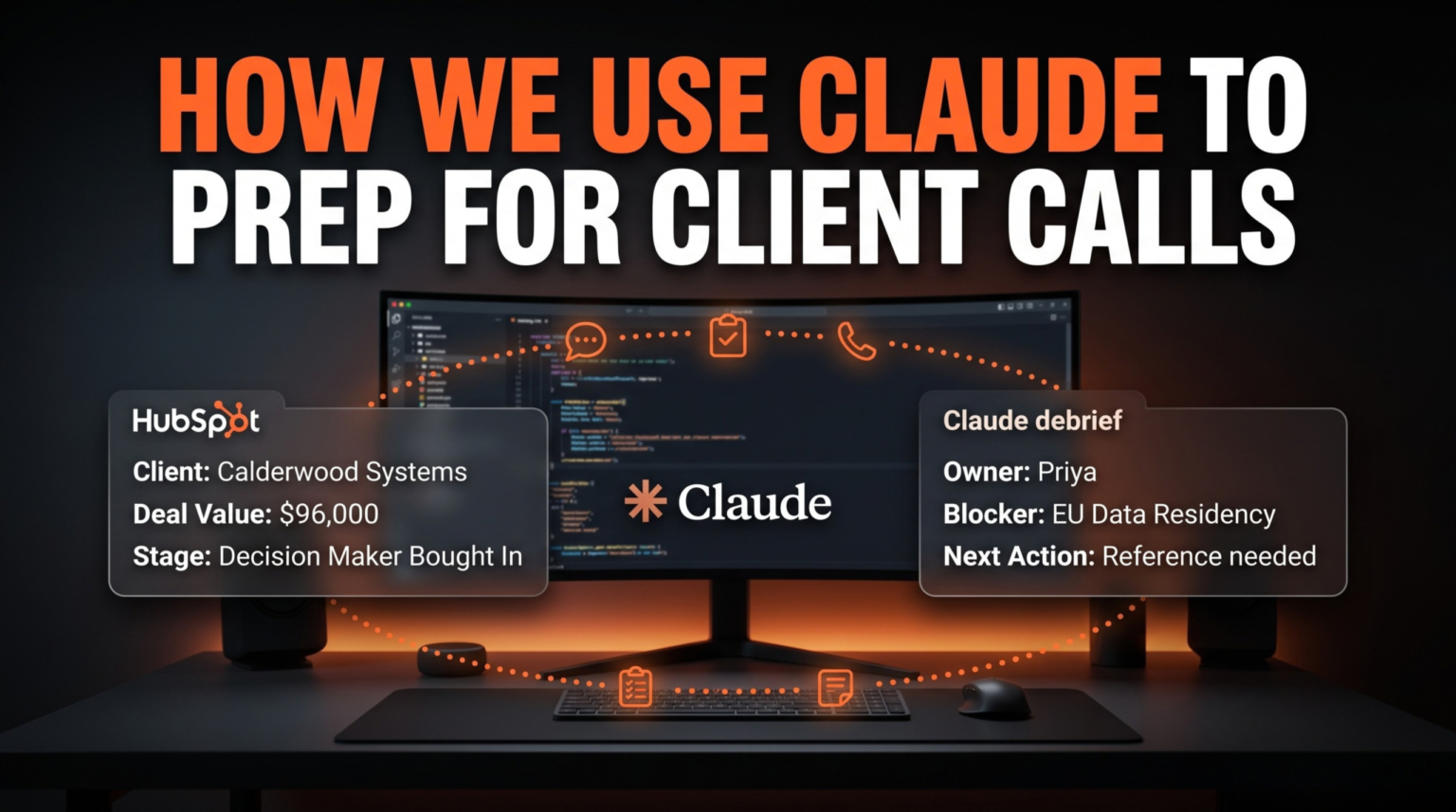
Most sales reps walk into a client call...
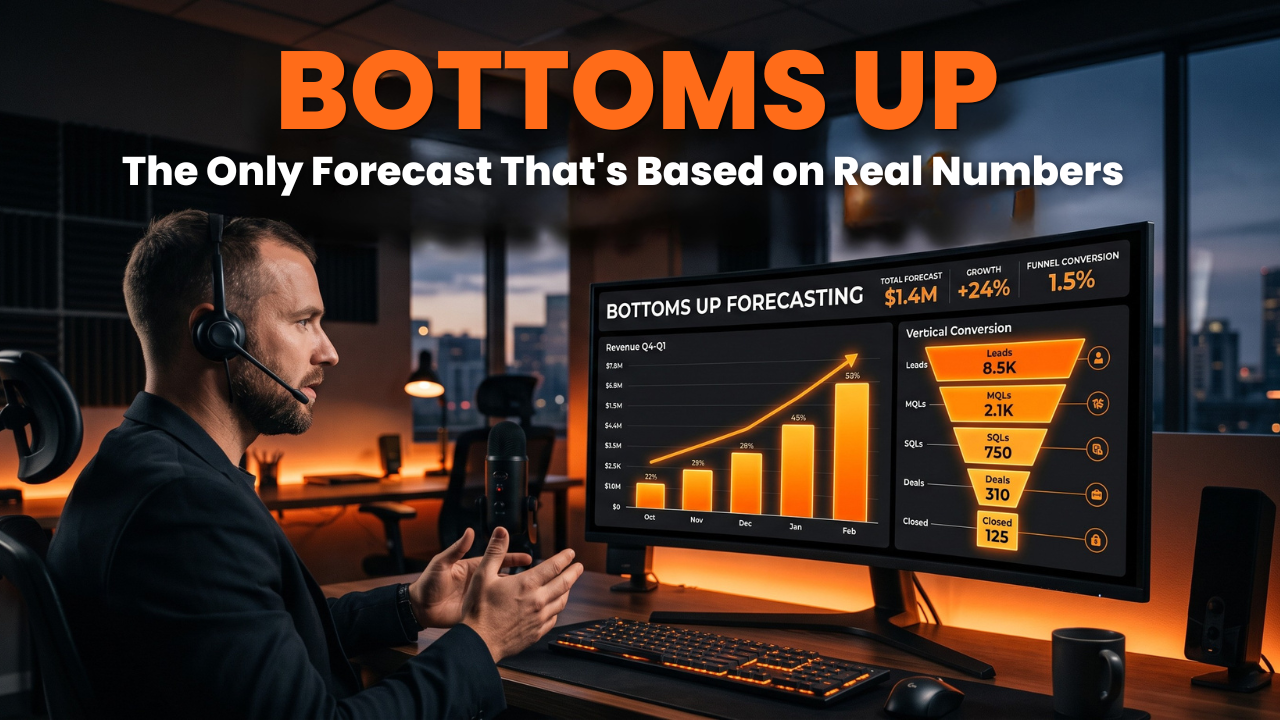
Top-down targets tell you what to hit. Bottoms...
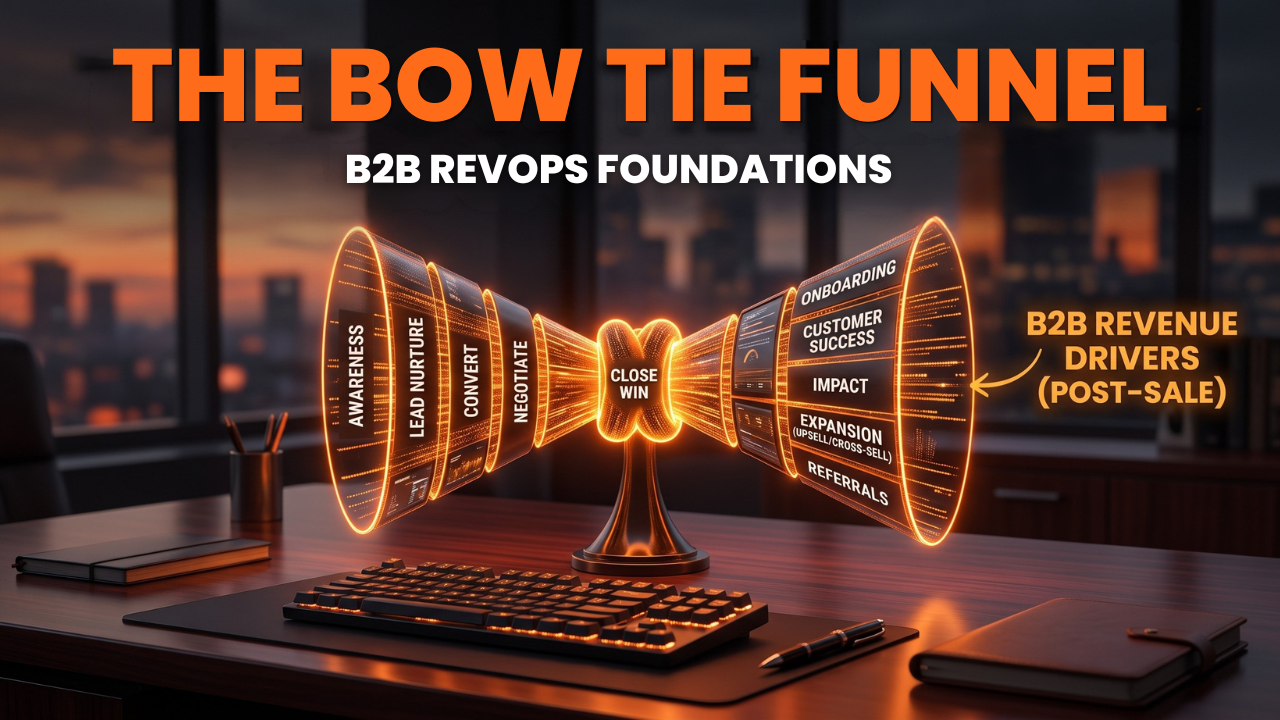
The traditional funnel stops at the close. The...
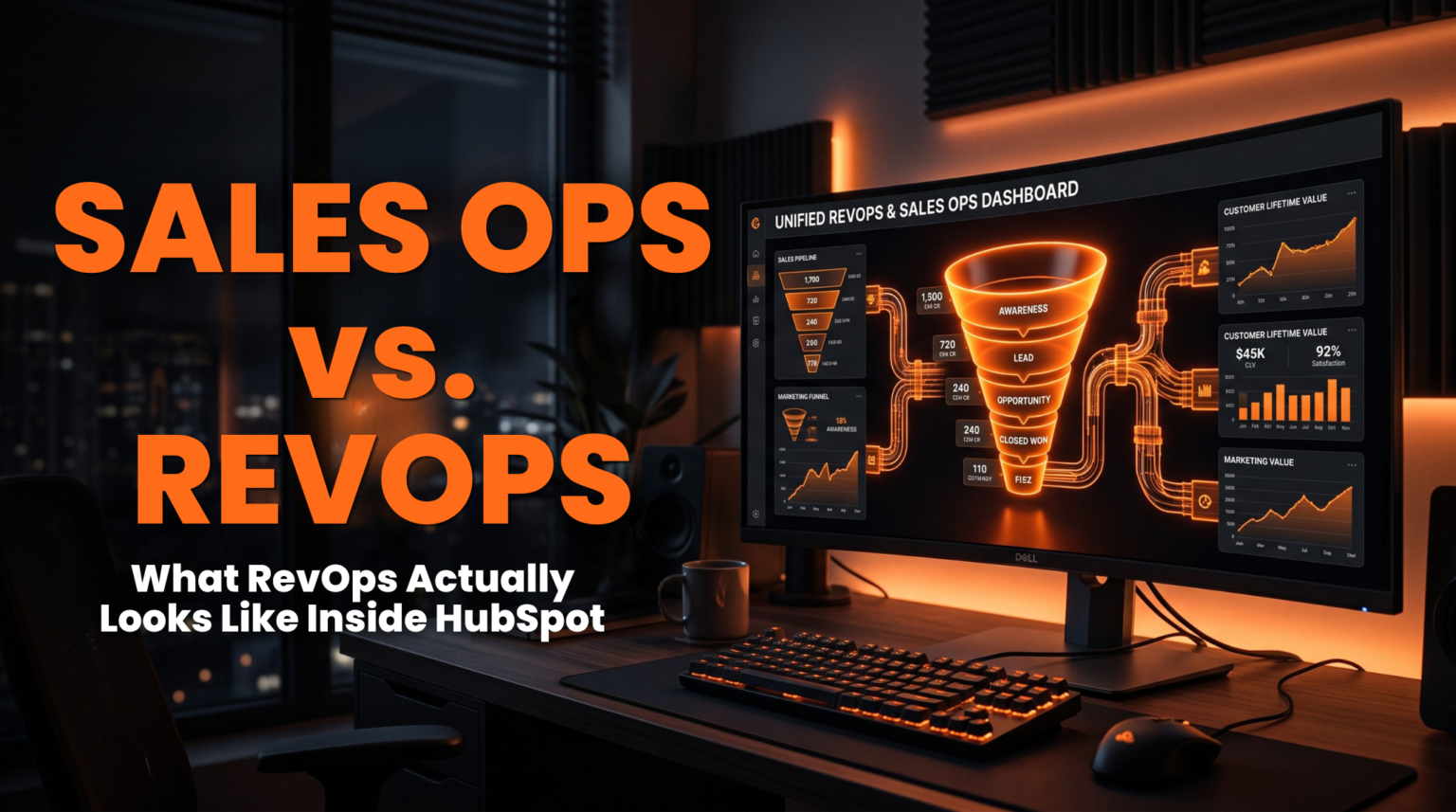
Many founders use "RevOps" and "Sales Ops" interchangeably....